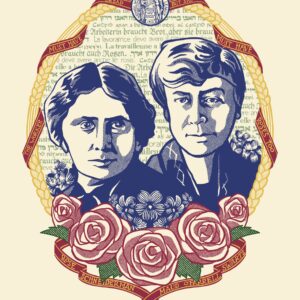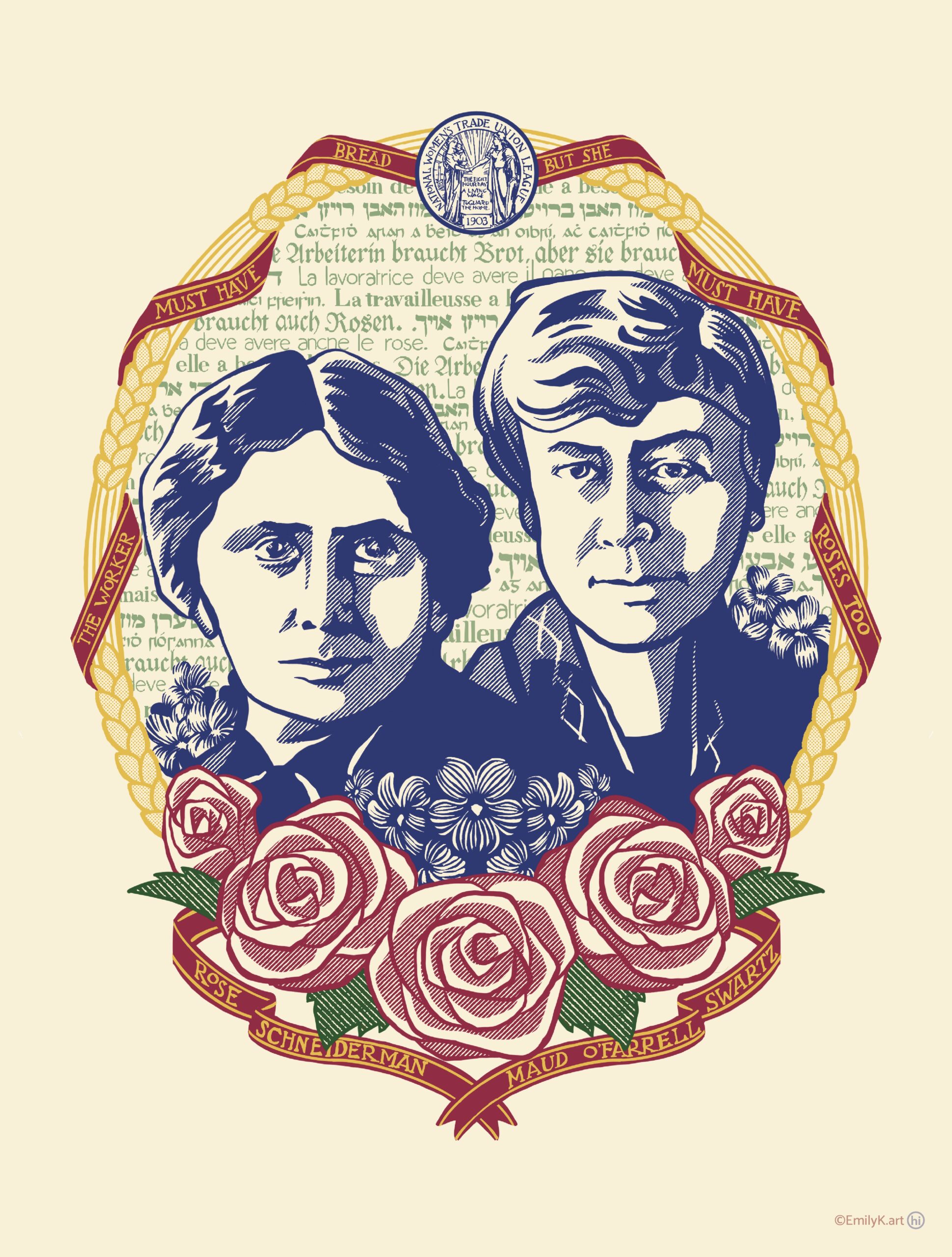
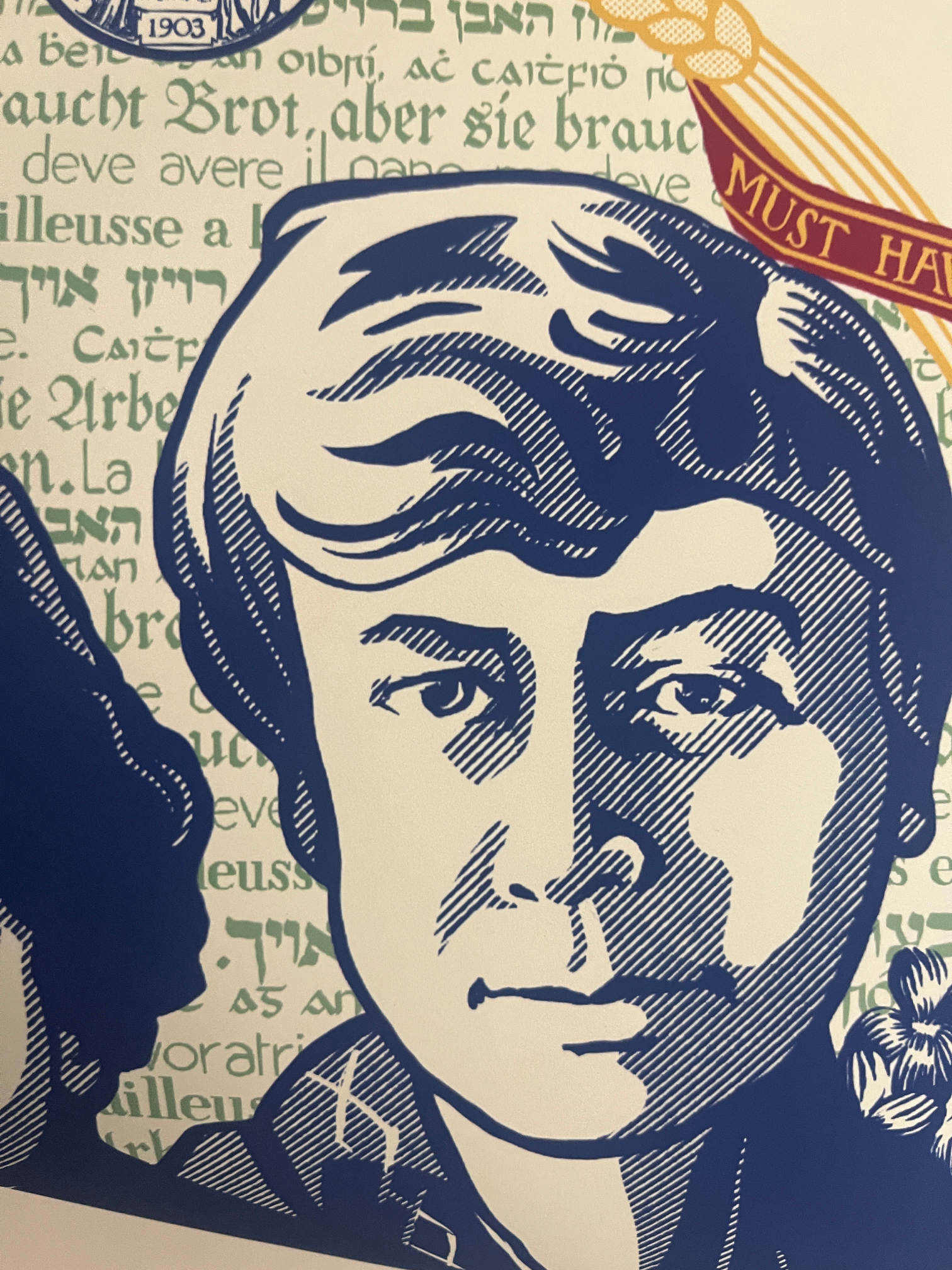
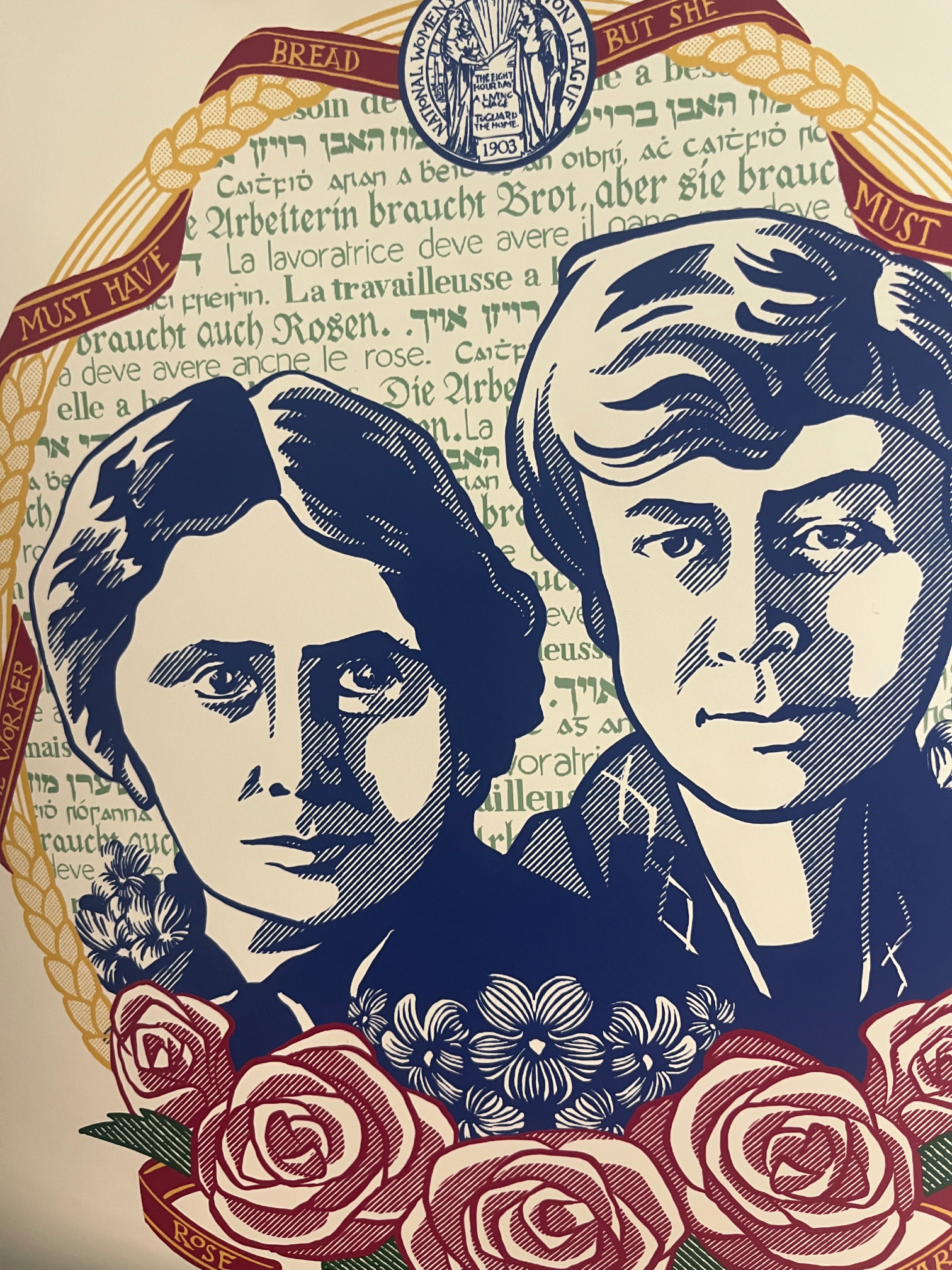
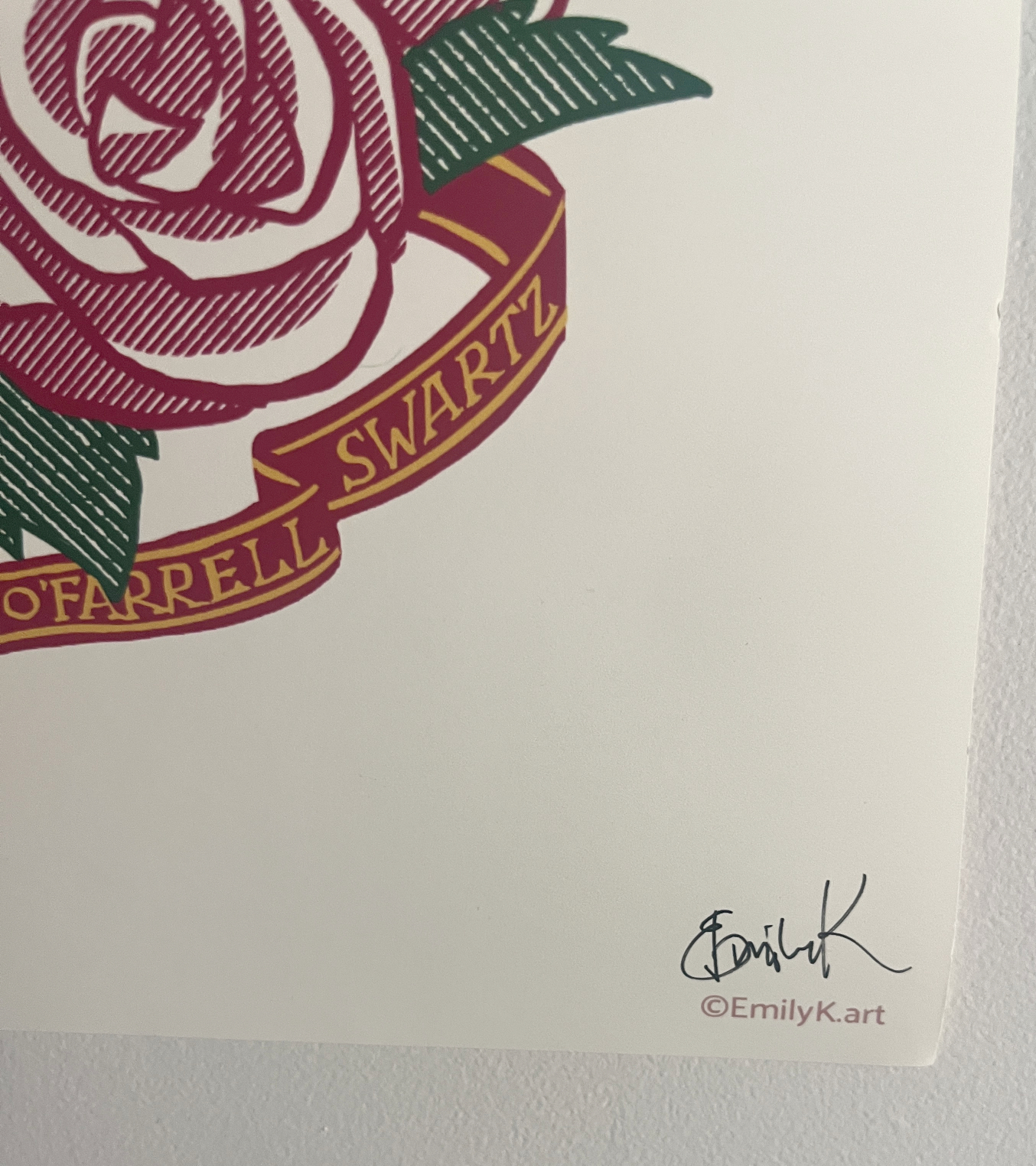
Rose Schneiderman and Maud Swartz were active in labor organizing in the early 20th century, especially among newly-arrived immigrant communities. An Irish immigrant herself, Swartz spoke several languages – each one represented in the background letterwork in light green. This gave her an advantage in organizing immigrants who didn’t yet have a firm grasp of English. Both women worked for the Women’s Trade Union League (the seal of which is at the top of the piece). Schneiderman popularized the phrase “the worker must have bread, but she must have roses too,” which is present in multiple languages in the piece. The colors were chosen based on the union organizing and Socialist movements active at the time – yellow wheat sheaves, and red roses. The violets that surround the two women add an additional symbolism relating to their association with Queer identities – violets were associated with the lesbian community at the time, due to their association with the poet Sappho.
As I mentioned, they were partners until Swartz’s death. Swartz was married briefly, but separated from her husband as the relationship was very unhappy. However, being Catholic, she refused to divorce. Her religious affiliation didn’t prevent her from partnering with a Jewish woman, and Schneiderman herself never married. Although one obvious explanation is that both women were lesbian or bisexual, another is that they were Asexual or Aromantic, and developed a relationship that could be described as Queerplatonic – not involving sexual intimacy, but lifelong emotional devotion to one another. The purple color I used not only matches the violet blossoms, but represents a stripe in the Asexual Pride flag. Queer individuals from history often hid their identities in hostile cultural environments. While allosexual Queers can often be sussed out by their relationships, Aces are not commonly identified. All we can do is guess.
There is only one of these prints available!
—
Museum-quality posters made on thick matte paper.
• Measures 12″ x 16″
• Paper thickness: 10.3 mil
• Paper weight: 189 g/m²
• Opacity: 94%
• ISO brightness: 104%
• Paper is sourced from Japan